
ESWATINI PARTICIPATES IN SADC HIGHER EDUCATION TRANSFORMATION MEETINGS
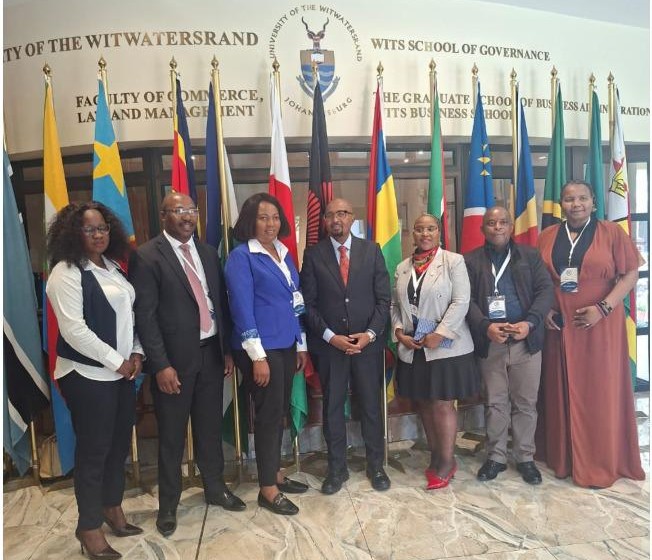
The Eswatini delegation, led by the Principal Secretary in the Ministry of Education and Training, Nanikie Mnisi is participating in two important regional meetings: the Vice Chancellors’ Strategic Meeting on Regional Higher Education Transformation, held from 31 August–1 September 2026, followed by the SADC Technical Committee on Higher Education and Training, Research and Development Meeting, taking place from 2–4 September 2026.
The Vice Chancellors’ Strategic Meeting was officially opened by Hon. Buti Manamela, highlighting the importance of regional collaboration and strategic leadership in responding to the rapidly changing higher education landscape.
The Technical Committee meeting is being held under the theme: “Transforming Higher Education in the SADC through Regional Strategy, Digital Innovation, Data Intelligence and Flexible Learning Pathways.”
The discussions come at a critical time when higher education systems are being reshaped by artificial intelligence, digital transformation, changing labour market demands, climate change, demographic transitions and the growing need for flexible and lifelong learning opportunities.
Key areas on the agenda include:
• Operationalisation of the SADC University of Transformation (SUT) and consideration of its roadmap;
• Development of a SADC Higher Education Data and Information System to strengthen evidence-based planning and decision-making;
• Implementation of the SADC Higher Education Strategy and its Strategic Framework Implementation Plan;
• Progress on the SADC Qualifications Framework (SADCQF);
• Regional approaches to micro-credentials, flexible learning pathways and digital credential ecosystems;
• The SADC Fourth Industrial Revolution Strategy and Implementation Plan;
• The revised SADC Protocol on Science, Technology and Innovation;
• Strengthening regional innovation ecosystems through the SADC Startup Model Law Framework; and
• Advancing the participation of women in science, engineering and technology.
The meetings provide an important platform for SADC Member States to build consensus on regional higher education transformation priorities, strengthen cooperation and develop coordinated implementation pathways. The proposed SADC University of Transformation, in particular, is evolving towards a collaborative regional network model that leverages universities, Centres of Excellence, Centres of Specialisation, governments, industry and development partners across the region.
The Executive Secretary of the Eswatini Qualifications Authority (EQA), Mboni Dlamini is part of the Eswatini delegation, contributing to discussions that have direct implications for qualifications development, recognition, quality assurance, credit accumulation and transfer, micro-credentials, flexible learning and the development of interoperable regional qualifications systems.
For Eswatini, participation in these engagements is particularly significant as the country continues to strengthen implementation of the Eswatini Qualifications Framework (ESQF) and its alignment with regional developments, including the ongoing review and strengthening of the SADCQF.
The EQA remains committed to supporting quality, comparability, transparency and lifelong learning within Eswatini’s qualifications system and to contributing to regional initiatives that enhance learner mobility, recognition of qualifications and the responsiveness of education and training systems to the needs of the future economy.
The SADC engagements are expected to contribute to strengthened regional consensus, agreed next steps for the operationalisation of the SUT, recommendations on the regional higher education data system and a coordinated roadmap for future regional collaboration.
Eswatini is actively participating in shaping a more connected, innovative, inclusive and future-ready SADC higher education system.